How to Stop Auto Blog Writer AI from Repeating Itself
How to prevent repetitive or generic output from an auto blog writer AI: Near-duplicate posts usually mean the input is doing the damage. When your auto…
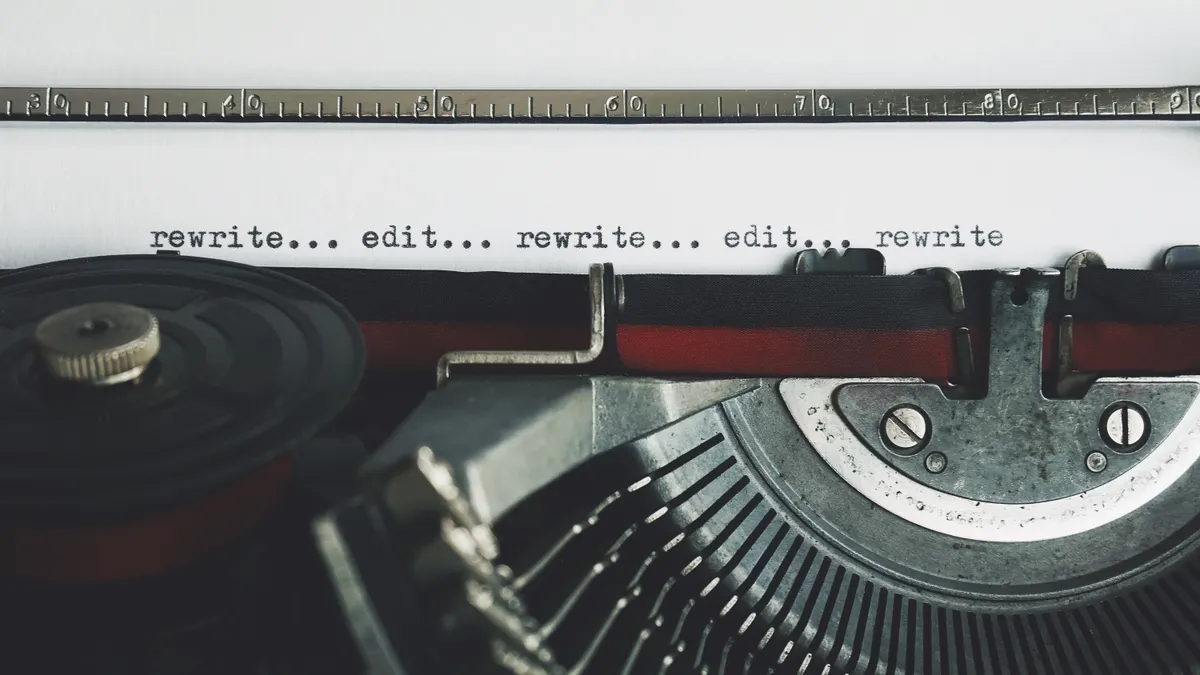
Typewriter with repeated words on the paper
Last updated: October 12, 2026
Key Takeaways
- Repetition comes from repeated instructions, repeated topic shapes, and thin source material.
- Unique constraints help before drafting: audience, context, angle, exclusions, and source notes.
- Add an editorial check for overlap, not just grammar.
- Low-creativity settings and vague prompts push the model toward familiar wording.
Near-duplicate posts usually mean the input is doing the damage. When your auto blog writer AI keeps producing them, better prompts alone will not fix it; tighter source material, stricter structure, and a hard review step will. Scale makes the problem show up fast. Search performance slips, readers notice, and internal quality takes a hit.
Quick answer: a three-part workflow—brief, draft, review—usually cuts generic output the fastest.
What Actually Causes Repetitive AI Blog Output?
Repetitive or generic output from an auto blog writer AI usually starts with the same three ingredients: the same instruction, the same topic shape, and thin source material. Ask for “a blog post about email marketing” five times with no constraints, and you will get five versions of the same outline. Change the source pack, the audience, and the job to solve, and the draft shifts.
The biggest mistake is treating a vague prompt like a creative brief. It is not. The model is pattern-matching. So the easy patterns have to go. When every request begins with “Write a blog article about X,” sameness is baked in. When every request carries the same 3 bullet points and no examples, sameness shows up again.
Here is the core rule I would use: when the prompt could fit any topic, the article could fit any topic too.
| Situation | Best Path | Why Other Options Fail |
|---|---|---|
| Same headline style, same intro, same conclusion | Change the brief, not just the wording | Rephrasing the prompt still leaves the same structure |
| Thin topic with little source material | Add source notes, product docs, or a customer scenario | The model fills gaps with safe, generic filler |
| Many articles on one cluster | Assign a distinct sub-angle to each article | Topic overlap causes repeated subheads and examples |
| Mixed audience levels | Pick one reader and one decision point | Trying to speak to everyone flattens the article |
Look at the first 200 words of three drafts. Do they all open with a definition, a broad trend, and a promise to “explore”? Then the brief is the problem, not the model.
Quick check: short, broad prompts that fit every topic breed repetition.
How do I prevent repetition before the AI writes a draft?
Repetition drops when the prompt has unique constraints: audience, context, angle, exclusions, and source material. Once the AI knows who is reading and what problem they need solved, it has less room to fall back on boilerplate.
I would use a prompt structure like this:
- Name the reader in plain terms: “solo marketer managing a 20-post content calendar.”
- State the decision they need to make: “How do I keep AI drafts from sounding like copy-paste content?”
- Add one specific context: “We publish on SEO, not product-led growth.”
- Require one angle, not ten: “Focus on workflow fixes, not writing advice.”
- Ban common filler phrases and clichés.
- Require distinct section purposes: diagnosis, fix, edge cases, review process.
- Ask for one concrete artifact, such as a checklist or decision table.
- Include source material if possible: a product page, style guide, or customer note.
Many generic articles go wrong here: they treat “prompt engineering” as though style is the main issue. It is not. Structure matters more than phrasing. Without editorial boundaries, the model keeps circling back to safe transitions, broad claims, and summary paragraphs.
When your content workflow uses ChatGPT, Claude, Jasper, or Writesonic, the same principle applies. The tool changes; the failure mode does not. Split the work into three tasks: topic selection, draft generation, and editorial shaping. Do not ask one prompt to do all three.
A practical anti-repetition prompt should include at least one of these constraints:
- “Do not reuse the same example twice.”
- “Every section must add a new decision.”
- “Avoid generic marketing language.”
- “Write for a reader who has already tried basic prompts.”
- “Use one comparison, one checklist, and one edge-case section.”
Aim for a draft where at least half the subheads would be wrong for a different topic. That is a good sign the piece is tailored.
Quick check: when prompts do not specify the reader, the decision, and the angle, generic sameness follows.
What should I change in the workflow if I publish at scale?
Add an editorial gate that checks for overlap, not just grammar. At 20, 50, or 200 articles a month, repetition usually comes from workflow design, not the model itself. The fix is a content system that tracks angles before it tracks words.
Here is the workflow I would choose:
- Maintain a simple topic matrix with topic, search intent, audience, and unique angle.
- Assign one “job to be done” per article, such as compare, troubleshoot, choose, or avoid.
- Keep a banned-phrases list for your brand voice and your AI prompts.
- Feed the model source material: product notes, interview snippets, support tickets, or SERP observations.
- Ask for an outline first, then reject duplicate subheads before a full draft is written.
- Run a similarity check against your own archive by title, subhead, and first paragraph.
- Edit for angle drift, not just copy quality. When two articles solve the same problem, merge or retire one.
That last step matters more than people think. A generic AI article is often not “bad writing”; it is an extra page competing with a better one you already have. When the new draft repeats an older article, rewriting it may not be enough. Sometimes consolidation is the cleaner move.
For teams using Surfer, Clearscope, Frase, Ahrefs, or Semrush, use them as support tools, not as angle generators. They help with topical coverage, but they will happily reinforce sameness if everyone chases the same keyword headings.
One honest trade-off: the more structure you add, the less speed you get. A five-minute draft becomes a 20-minute draft. Still, that is cheaper than publishing ten forgettable articles that all sound alike.
Quick check: at scale, no overlap review before drafting means repetition is a workflow failure.
Which AI settings and prompt patterns make repetition worse?
Low-creativity settings and vague constraints make repetition worse because they narrow the model toward the most probable wording. When your tool has a temperature setting, a low value often makes outputs more predictable, which can help factual copy but hurt fresh blog angles. When the tool does not expose those controls, the prompt still does the same job.
The standard advice to “just make the prompt more detailed” is only half right. Too much detail in the wrong place can make the draft more rigid without making it less repetitive. What you need is not more words; you need better instructions about novelty.
I would watch for these repeat-triggering patterns:
- Asking for “an article” instead of a decision-focused format
- Reusing the same outline template for every topic
- Starting every prompt with “Write about…”
- Letting the model choose the audience
- Giving no negative constraints
- Asking for “engaging” language without showing what that means
When you are writing with ChatGPT or Claude, try a prompt that includes both positive and negative directions. For example: “Write for a founder choosing between in-house and outsourced content; do not open with a definition; do not use generic ‘in today’s world’ framing; include one trade-off where the usual advice fails.” That kind of instruction gives the model a fence to bump into.
A useful standard is this: when you can swap the topic from “blog AI” to “project management software” and the prompt still mostly works, it is too generic. A strong prompt should break when the subject changes.
For technical teams, prompt logging helps. Save the prompt, the draft, the edit notes, and the published version. Then compare which prompt types keep producing bland content. The pattern usually shows up within a dozen samples.
Quick check: when prompts let the model choose the structure, opening, and audience, repetition is built in.
When the standard advice is wrong
Standard advice misses the mark when the issue is not creativity but duplication inside a narrow niche. When you write 30 articles about the same software category, some overlap is natural. The goal is not total uniqueness; it is giving each page a different question to answer.
Here are the edge cases where normal advice breaks down:
-
Situation: You cover one product category over and over.
What changes: The model will naturally reuse category language.
What to do instead: Build a topic map around jobs, not keywords. For example, “compare,” “switch,” “audit,” “fix,” and “budget” become separate article types. -
Situation: You only have a short brief and no source docs.
What changes: The AI has to invent structure from scratch.
What to do instead: Add 3–5 source notes, even if they are rough. A support transcript or internal FAQ is better than nothing. -
Situation: You need content in a hurry.
What changes: Speed pushes the AI toward safe, reusable language.
What to do instead: Use a shorter article format with one specific reader problem instead of a broad “ultimate guide.” -
Situation: The brand voice is intentionally plain.
What changes: Plain voice can slide into bland voice.
What to do instead: Make the substance do the work: tighter examples, sharper trade-offs, and clearer decisions. -
Situation: Multiple writers or editors use the same AI tool.
What changes: Everyone copies the same prompt pattern.
What to do instead: Create three approved prompt templates with different structures so the output does not converge. -
Situation: The article is meant to support SEO.
What changes: Search intent starts pulling every draft toward the same keyword-shaped outline.
What to do instead: Match the page to the search task, not the keyword alone.
A lot of generic advice says “be more creative.” That is not actionable. I would rather have a plain prompt that forces a clear angle than a clever one that produces fluffy prose.
Quick check: in a narrow niche, speed and repetition are linked, and topic architecture matters more than artistic flair.
How should I review AI drafts so they stop sounding interchangeable?
Review AI drafts by checking whether each section earns its place and whether the article would still make sense if you removed the most obvious filler. When the answer is yes, the draft is probably specific enough; when the answer is no, the model has padded the piece with generic glue.
I use a simple review pass with five questions:
- Does the opening name the reader’s actual problem in the first 40 words?
- Does each H2 add a different decision, not a rephrased version of the same advice?
- Are there concrete nouns, tools, standards, or workflows, not just abstractions?
- Is there at least one honest limitation or trade-off?
- Would this article still be useful if the topic were removed from the page title?
When the article fails any two of those, it needs more than line editing. It needs reshaping.
A good edit often means cutting, not polishing. Remove the paragraph that says what the previous paragraph already said. Drop the “best practices” section if it merely repeats the checklist. Replace a broad claim with a specific path: when this, then that.
For teams, I would set a 10-minute overlap review before publication. Compare the draft against the last three related articles. When two subheads, one example, and the same conclusion appear again, you have an overlap problem. Either change the angle or kill the piece.
The trade-off here is editorial effort. You spend more time reviewing than a bare-bones AI workflow would require. But when your site already has dozens of near-identical pages, that extra review is cheaper than cleaning up weak content later.
Quick check: when your review process checks grammar but not overlap, repetitive output will keep slipping through.
What is the fastest way to get less repetitive output tomorrow?
A fast fix is to force every prompt to include one unique angle, one excluded angle, and one concrete source. If you do only one thing tomorrow, stop asking for “an article about X” and start asking for “an article for Y reader making Z decision, with these three boundaries.”
Use this 5-step reset:
- Pick one reader type and one problem.
- Write one sentence that says what the article must help them decide.
- Add two things the AI must not do, such as “no generic intro” and “no recycled examples.”
- Give one source artifact: a product page, outline, transcript, or notes file.
- Require an outline first, then reject any duplicate section ideas before drafting.
When your current process still produces repetitive articles after that, the issue is probably not the model. It is either a thin content strategy or a publishing pipeline that rewards volume over distinctness.
I would not use a 20-step prompt for this. Simpler is better, as long as the prompt contains a real decision and a real boundary.
Quick check: for a fast win, fix the brief first and the style second.
FAQ
Why does my auto blog writer AI keep using the same phrases?
Because the prompt and source material are too similar from one request to the next, so the model keeps returning the safest phrasing.
Should I lower or raise creativity settings?
When your tool has a creativity or temperature control, a slightly higher setting may reduce sameness, but it can also increase drift. Review the result carefully.
Do I need a human editor if the AI draft looks fine?
Yes, because a clean draft can still repeat the same angle, example, or structure as older articles.
Drafted with AI; not yet reviewed by a person.